Deep mutational scanning to characterize viral evolution and antibody escape
Link to preprintIntroduction to Nipah virus
Diversity and Evolution
Nipah is a bat-borne virus that sporadically spills over into human populations, causing severe disease with high fatality rates. There are no approved vaccines or therapeutics available for the prevention or treatment of Nipah virus infection. Spillovers primarily occur in Bangladesh and India.
Phylogenetic tree of Nipah viruses
Surface Glycoproteins and Cell Entry
Nipah virus expresses two surface proteins: the receptor binding protein and the fusion protein. The receptor binding protein can bind two different host receptors, ephrin-B2 or ephrin-B3. Once bound, the receptor binding protein triggers the fusion protein to undergo a series of conformational changes that lead to the fusion of the viral and host membranes.
Nipah virus surface glycoproteins. The tetrameric receptor binding protein is on the left, and the trimeric fusion protein is on the right.
Safely measuring the effects of mutations on the Nipah fusion protein
To measure the effects of ~8,500 mutations in the Nipah fusion protein, we used a non-replicative pseudovirus system. This allows us to safely measure the effects of mutations without the risks associated with introducing mutations into a live virus. Importantly, we used a vector that expresses no viral proteins besides the Nipah fusion protein, and other essential pseudovirus components are provided from four separate plasmids. To limit generating hazardous information, we performed all experiments in cells expressing either bat ephrin-B2 or -B3, rather than the human orthologs. This approach allows us to measure the effects of mutations in the context of the natural bat host, rather than potential human-specific adaptations. We previously published data from deep mutational scanning of the receptor binding protein using the same safe approach.
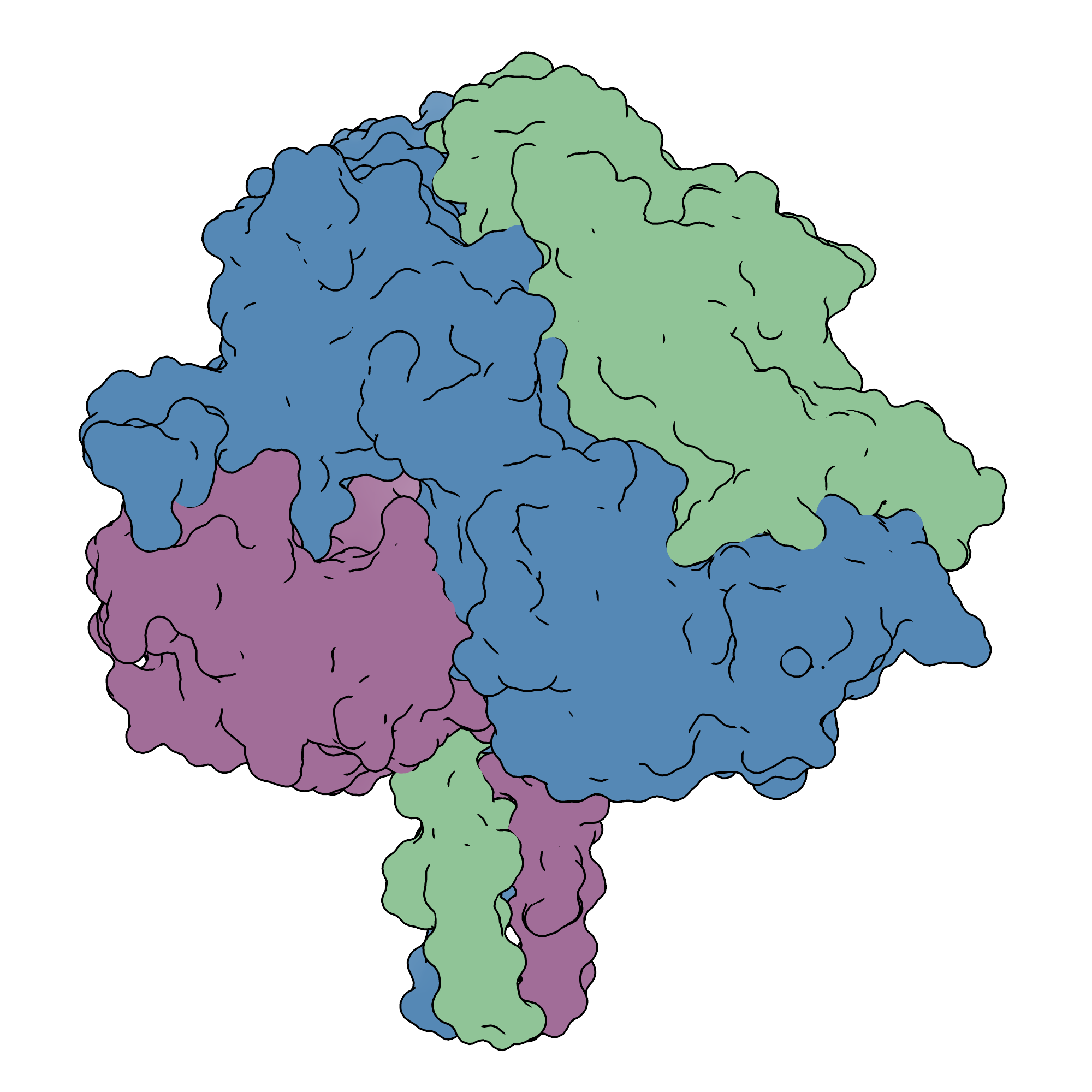
Prefusion
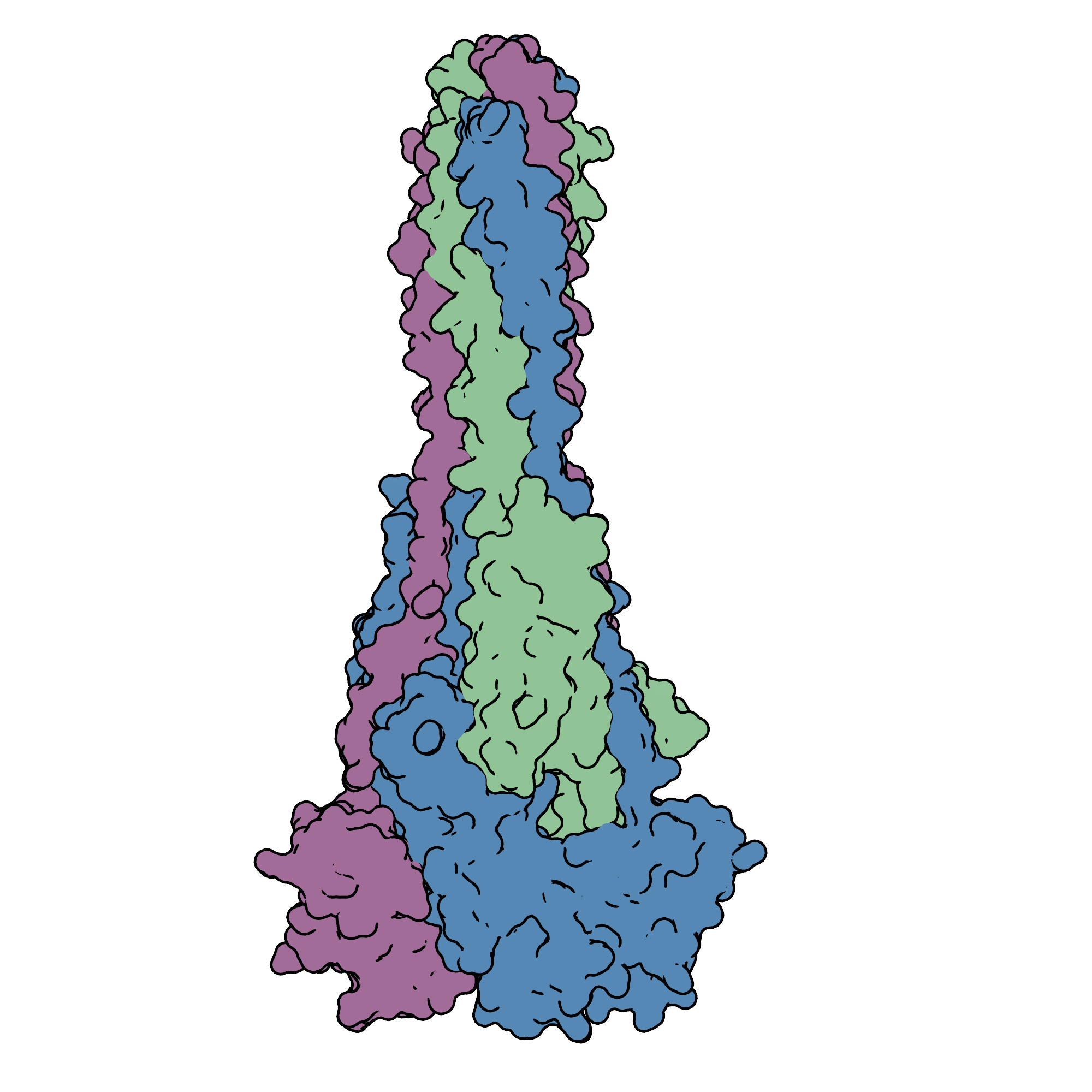
Postfusion
Fusion Protein Conformational Change
The trimeric fusion protein undergoes a dramatic, irreversible conformational change following triggering. The structure transistions from the prefusion conformation to an extended postfusion conformation. This enables the fusion peptide, located near the top, to interact with the host membrane and results in fusing the viral and host membranes, completing the first step of infection.
Effects of mutations on cell entry
Effects of mutations on cell entry
Explore the cell entry data in the heatmap below. The heatmap can be dragged, zoomed in, and individual cells can be hovered over for more information.
The color of the cell indicates the effect of the mutation on cell entry, with red indicating a strong negative effect. The unmutated residue is indicated with a black 'X', and missing residues are shown in gray.
Comparisons between the receptor binding protein and fusion protein
How do these two proteins compare in mutational tolerance?
Since we previously performed deep mutational scanning on the Nipah receptor binding protein, we compared the effects of mutations on cell entry with the fusion protein. Mutations in the fusion protein were generally more deleterious on cell entry than mutations to the receptor binding protein
Effects of mutations in cells expressing bat ephrin-B2 or -B3
Host receptor had a strong effect on the effects of mutations in the receptor binding protein, but not the fusion protein.
Effects of mutations on antibody neutralization
Mutations have different effects on antibody neutralization
We determined the identity and relative effects of Nipah fusion mutations on neutralization by a panel of seven antibodies. Hover over the points below to see more information about each mutation. Note that some antibodies are less affected by mutations than others.
Toggle between the different antibodies to see the sites with the most combined escape.